Does daily aspirin cause bruising?
 By Margaret Hale, Reunoa EditorialLast updated
The short answer
Yes. Daily low-dose aspirin makes platelets less sticky, so small leaks under the skin take longer to seal and bruises appear more easily, especially on thin skin after 60. Easy bruising is a common, expected side effect. Report large or unexplained bruises or any other bleeding to your doctor, and don't stop prescribed aspirin on your own.
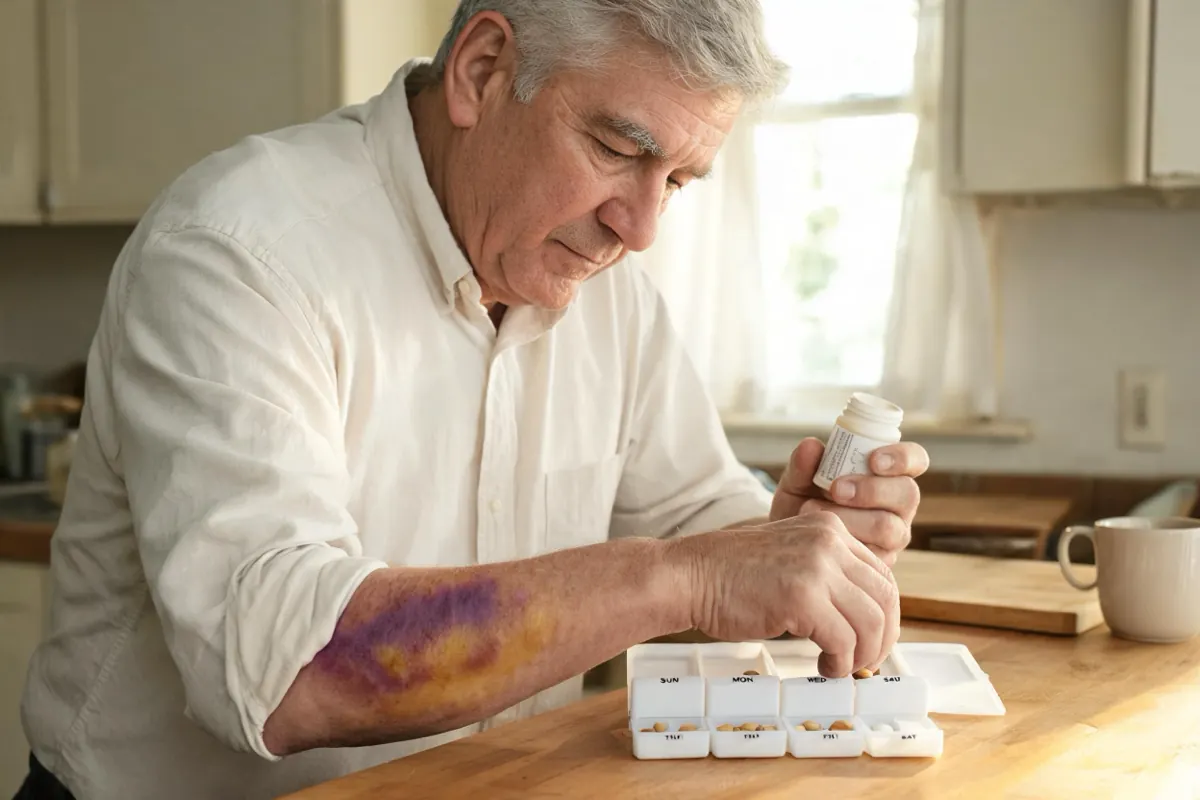
Millions of older adults take a "baby aspirin" every day — often after a heart attack, stroke or stent. If you're one of them and keep finding new bruises, aspirin is very likely part of the reason.
Why aspirin causes bruising
Platelets are tiny blood cells that rush to a broken vessel and clump together to plug it. Aspirin blocks a chemical platelets need to stick together, and the effect lasts for the life of the platelet — about a week to ten days. So after a small knock, the leak takes longer to stop and more blood ends up under the skin. The NHS lists bleeding more easily than usual — including bruising — as a side effect of low-dose aspirin [2], and the U.S. drug information lists it too [1].
On thin, older skin with fragile vessels [4], the combination means bruises from bumps you never noticed.
How common is it?
Bruising is one of the most common side effects. More serious bleeding is less common but real: in the ASPREE trial, which followed more than 19,000 healthy adults over 70 (65 for some groups) for nearly five years, major bleeding occurred at 8.6 events per 1,000 person-years with daily 100 mg aspirin versus 6.2 with placebo [3].
That trial looked at people taking aspirin to prevent a first heart problem. It doesn't apply to people who take aspirin because they've already had a heart attack, stroke or stent — for them, aspirin's benefits are well established.
Should you stop taking aspirin?
Not on your own. If your doctor prescribed aspirin after a heart attack, stroke or stent, stopping it suddenly can raise your risk of another event.
What you can do:
- Ask your doctor at your next visit whether you still need it — especially if you started it yourself years ago "for your heart" without a specific reason.
- Tell your doctor or pharmacist about every other medicine and supplement you take. Fish oil, vitamin E, ginkgo, turmeric and pain relievers like ibuprofen add to aspirin's effect.
- Never take extra aspirin for pain on top of a daily low dose without checking.
Aspirin plus another blood thinner
Bruising is more likely when aspirin is combined with clopidogrel (Plavix), apixaban (Eliquis), rivaroxaban (Xarelto) or warfarin. These combinations are usually deliberate and time-limited — for example, after a stent. Keep taking them exactly as prescribed and ask your doctor how long the combination is planned for. See bruising on blood thinners.
Caring for your skin on aspirin
- Moisturise forearms and hands twice daily to keep skin supple.
- Wear light long sleeves for gardening and other jobs where you might knock your arms.
- Use cold on a fresh bruise for the first 48 hours, then gentle warmth.
- Topical bruise products act on the skin, not in your blood, so they don't change how aspirin works.
Frequently asked questions
Does baby aspirin cause bruising?
Yes. Even low-dose (81 mg) aspirin makes platelets less sticky for about a week to ten days, so bruises form more easily and can be larger. It's one of the most common side effects.
How long after stopping aspirin does bruising stop?
New platelets replace the affected ones over about a week to ten days, so bruising tendency usually improves within that time. Never stop prescribed aspirin without your doctor's advice.
Is bruising on aspirin dangerous?
Ordinary small bruises are usually harmless and expected. Large or unexplained bruises, black stools, blood in urine or vomit, or bleeding that won't stop need prompt medical attention.
Can I take something for bruising while on aspirin?
Topical products such as arnica or vitamin K creams act on the skin and don't affect how aspirin works. Avoid adding oral supplements that thin the blood, such as fish oil or ginkgo, without asking your pharmacist.
Sources
- Aspirin — Drug Information — MedlinePlus.
- Low-dose aspirin — NHS (UK National Health Service).
- McNeil JJ, et al. Effect of Aspirin on Cardiovascular Events and Bleeding in the Healthy Elderly (ASPREE). New England Journal of Medicine, 2018. PubMed 30221597
- Aging changes in skin — MedlinePlus Medical Encyclopedia.
- Bleeding into the skin — MedlinePlus Medical Encyclopedia (U.S. National Library of Medicine).
General information, not medical advice. Written by the Reunoa editorial team; Reunoa makes Bruise Defense & Repair Serum. See our editorial policy for how we pick sources and keep product mentions fair.