Bruising in older adults: a family guide to what's normal and what's not
 By Margaret Hale, Reunoa EditorialLast updated
The short answer
Easy bruising is very common in older adults because skin thins, blood vessels become fragile and many take blood thinners or aspirin. Small, flat bruises on the forearms, hands and shins are usually not serious. See a doctor for bruises that appear without explanation in unusual places, are very large, come with other bleeding or follow a fall. Unexplained bruises can also be a sign of mistreatment.
Key takeaways
- Bruising on forearms, hands and shins from minor knocks is common after 65 [1].
- Blood thinners and aspirin make bruises larger; never adjust them without the doctor [2].
- Bruises on the face, neck, chest, back, inner arms or in a pattern deserve attention — and so does any bruise after a fall.
- Unexplained bruising with bleeding gums, nosebleeds, blood in urine or tiredness needs a medical check [3].
- Simple home changes, moisturising and protective clothing reduce new bruises.
On this page
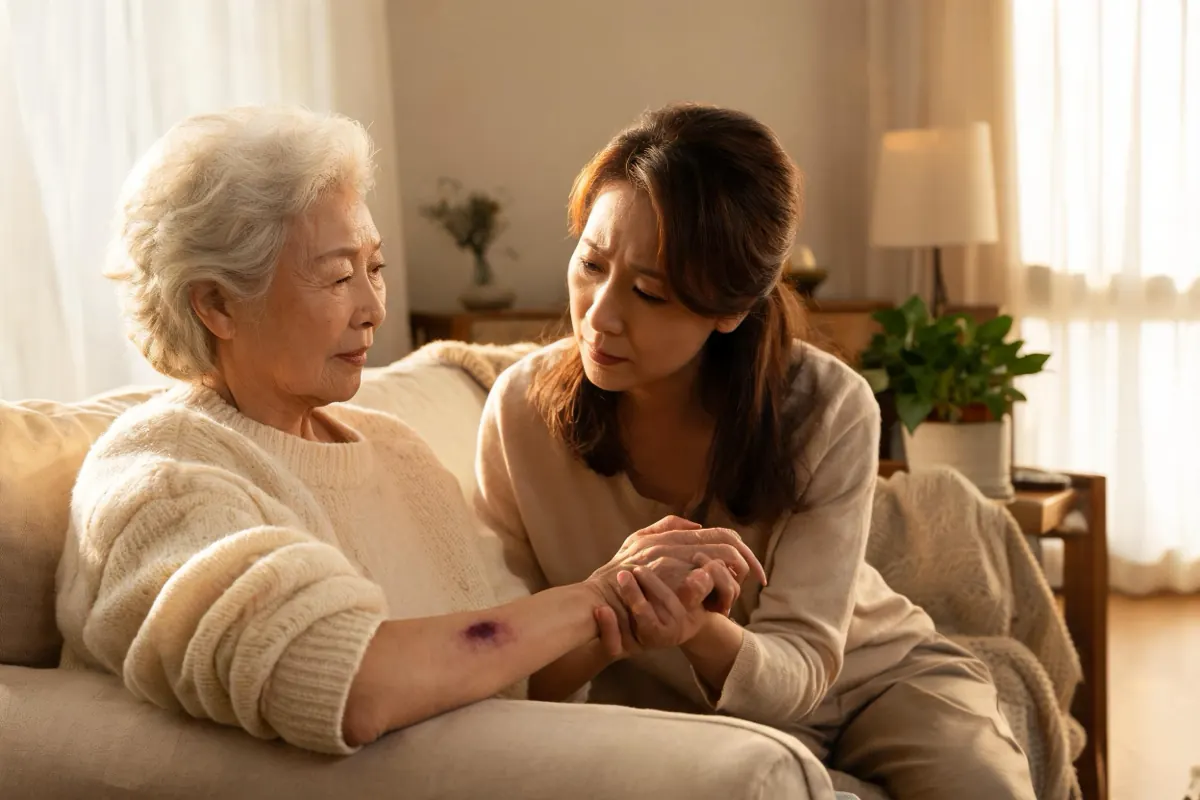
You visit your mother and notice purple marks on her forearms. She waves it away — "I bumped into something" — but you can't help worrying. Is this normal? Should you call her doctor?
This guide is for adult children and caregivers. It covers what's typical, what isn't, and what you can do.
Why older parents bruise so easily
- Thin skin. With age, skin thins, loses fat padding and its blood vessels become more fragile [1].
- Sun damage. Decades of sun weaken the skin on forearms and hands most — causing the flat purple patches called senile purpura, which affect more than 1 in 10 people over 50 [4].
- Medicines. Blood thinners, aspirin and steroids make bruises larger and more frequent [2]. In our anonymous quiz, just over half of respondents aged 75+ said they take a daily blood thinner or low-dose aspirin [7].
- Unnoticed knocks. Reduced sensation and vision mean many bumps go unnoticed — so "I don't remember hitting anything" is often genuinely true.
In our quiz, 43% of respondents said being asked "What happened to your arm?" is one of the things that bothers them most [7]. Asking with care, not alarm, matters.
Normal vs. worth checking
| Usually normal | Worth a closer look |
|---|---|
| Flat purple patches on forearms and backs of hands | Bruises on the face, neck, ears, chest, abdomen, back, buttocks or inner arms/thighs |
| Bruises on shins and knees from furniture | Bruises in a pattern — finger marks, a hand shape, belt or cord marks |
| A few bruises at different stages | Many bruises at once, or bruises on both arms in the same place (grip marks) |
| Your parent can explain most of them, or they're clearly from small knocks | Explanations that don't fit, change, or come from someone else |
| Bruises fade over 2–4 weeks | Bruises with swelling, pain, or difficulty moving a limb |
Medical warning signs
Bruises and falls
Bruises on the hips, outer thighs, elbows, knees and the side of the head can mean falls your parent hasn't mentioned. Ask gently, and consider a falls-risk check with their doctor: medicines that cause dizziness, eyesight, footwear, lighting and home hazards all play a part.
When bruises may signal mistreatment
Most bruising in older adults has innocent explanations. But elder abuse and neglect do happen, at home and in care settings. Be alert to bruises in hidden places (inner arms, thighs, torso), grip marks, injuries at different stages that aren't explained, a parent who seems afraid of a caregiver, or a caregiver who won't let you speak to them alone. In the U.S., you can contact Adult Protective Services in your state or the Eldercare Locator (1-800-677-1116). In an emergency, call 911.
How you can help at home
- Moisturise together. A twice-daily moisturising routine nearly halved skin tears in aged-care residents [5]. Make it part of the morning and bedtime routine.
- Protect the arms. Light long sleeves or soft arm protectors for gardening and daily tasks.
- Fix the house: pad sharp edges, add night lights, clear walkways, move often-used items to waist height.
- Review medicines with the doctor or pharmacist — including supplements like fish oil, ginkgo or vitamin E. Don't stop prescribed blood thinners.
- Keep a simple log of new bruises with dates and photos. It helps the doctor spot changes.
- Talk about it kindly. Many older adults feel embarrassed by their bruises. Reassurance helps.
Frequently asked questions
Is it normal for elderly people to bruise easily?
Yes. Thin skin, fragile blood vessels and common medicines such as blood thinners and aspirin make easy bruising very common after 65, especially on the forearms, hands and shins.
When should I worry about bruises on my elderly parent?
When bruises appear without explanation in unusual places like the face, torso or inner arms, form patterns, are very large or painful, follow a fall, or come with other bleeding, tiredness or weight loss.
What causes big purple bruises on elderly arms?
Usually senile (actinic) purpura: sun-damaged, thin skin whose small vessels break from minor contact. Blood thinners make the patches larger. They're harmless but show that skin is fragile.
Can bruising in the elderly be a sign of something serious?
Occasionally. Unexplained bruising can be linked to blood disorders, liver disease, medicines or vitamin deficiencies — or to falls or mistreatment. A doctor can run simple blood tests and look at the whole picture.
How can I help my parent's skin bruise less?
Help with twice-daily moisturising, protective sleeves, a safer home layout and a medicine review with the doctor. Gentle skincare designed for fragile skin can also help.
Sources
- Aging changes in skin — MedlinePlus Medical Encyclopedia.
- Blood Thinners — MedlinePlus (U.S. National Library of Medicine).
- Bleeding into the skin — MedlinePlus Medical Encyclopedia (U.S. National Library of Medicine).
- Senile purpura — DermNet (New Zealand).
- Carville K, et al. The effectiveness of a twice-daily skin-moisturising regimen for reducing the incidence of skin tears. International Wound Journal, 2014. PubMed 25040325
- Ballas M, Kraut EH Bleeding and bruising: a diagnostic work-up. American Family Physician, 2008. PubMed 18481559
- Fragile Skin Report 2027 — aggregated, anonymous answers from the Reunoa skin quiz — Reunoa Editorial (learn.reunoa.com).
General information, not medical advice. Written by the Reunoa editorial team; Reunoa makes Bruise Defense & Repair Serum. See our editorial policy for how we pick sources and keep product mentions fair.