The best geri sleeves and arm protectors for thin skin (2027)
 By Margaret Hale, Reunoa EditorialLast updated
The short answer
Geri sleeves are soft, stretchy tubes worn over the forearms (or shins) to protect thin skin from bumps, friction and skin tears. Look for a breathable cotton-blend knit, seamless or flat seams, a gentle non-binding top band, optional padding for frequent knocks, and machine washability. Pair them with twice-daily moisturizing, which halved skin tears in a nursing-home trial.
Key takeaways
- Long sleeves and limb protectors are part of skin-tear prevention best practice [1].
- Twice-daily moisturizing halved skin tears in aged care — sleeves add physical protection [2].
- About 1 in 5 long-term care residents had a skin tear in one study [3].
- Choose non-binding bands — tight elastic can mark or tear fragile skin.
- Padded versions suit people who knock their arms often or use wheelchairs.
On this page
- Why they help
- What to look for
- Types of geri sleeves
- 1. Unpadded knit arm sleeves — best for everyday wear
- 2. Padded arm protectors — best for frequent knocks
- 3. Leg sleeves — best for shins
- 4. Long-sleeved UPF tops — best for active, independent seniors
- 5. Tubular bandage (short-term) — best after a skin tear
- Quick comparison
- Sizing tips
- Washing and care
- How to put them on gently
- Who benefits most
- Frequently asked questions
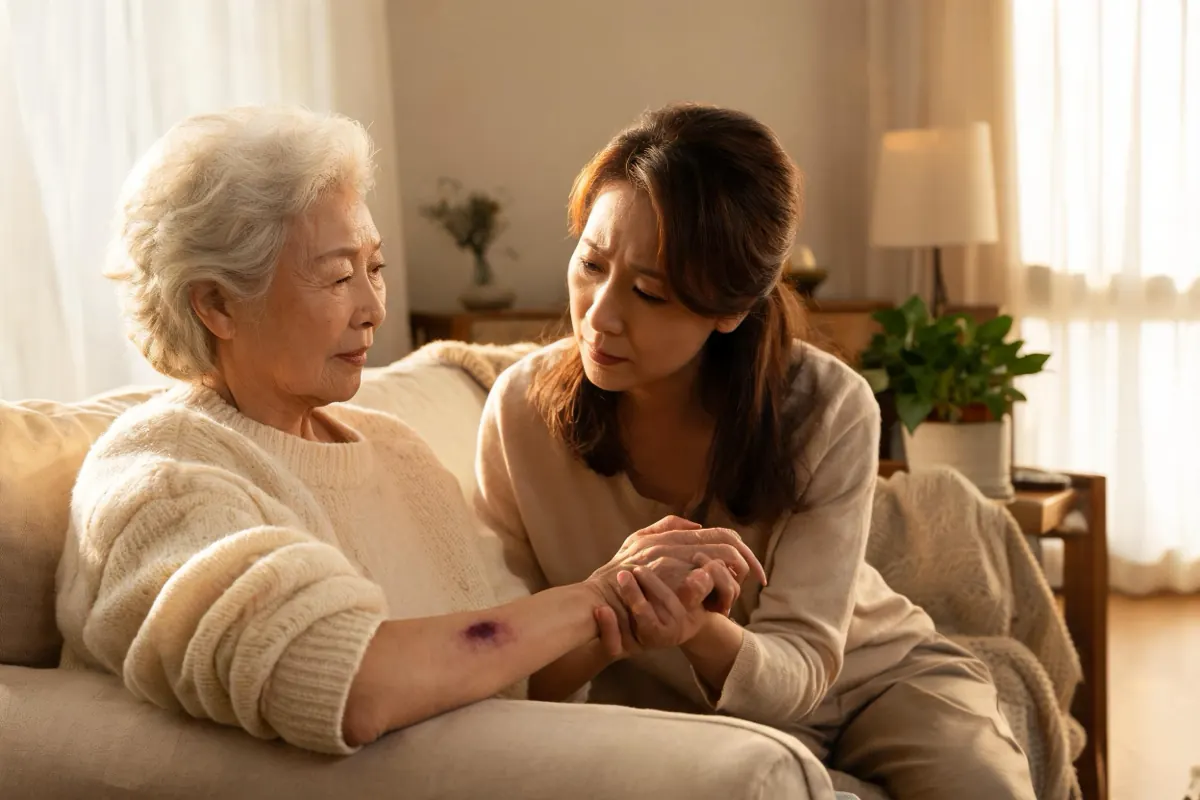
"Geri sleeves" (from geriatric) is the common name for protective arm sleeves used in hospitals, care homes and at home. They're simple: a soft knit tube from wrist to above the elbow that takes the friction and knocks instead of paper-thin skin.
Why they help
Skin tears happen mostly on the forearms and shins, from bumps, friction and being helped to move [6]. International best-practice recommendations for preventing skin tears include protecting the limbs with long sleeves, trousers or protectors [1] [5]. Sleeves don't replace moisturizing — which halved skin tears in a randomized trial [2] — but they add a physical layer.
What to look for
| Feature | Why it matters |
|---|---|
| Breathable cotton-blend knit | Comfortable all day, less sweating |
| Seamless or flat seams | No rubbing on fragile skin |
| Gentle top band | Tight elastic can mark or damage thin skin |
| Thumb loop (optional) | Keeps sleeve from riding up; covers the back of the hand |
| Padding (optional) | For frequent knocks, wheelchairs, bed rails |
| Right size | Too tight squeezes; too loose slips |
| Machine washable | Daily wear needs frequent washing |
| Skin-tone or discreet colours | More likely to be worn outside |
Types of geri sleeves
1. Unpadded knit arm sleeves — best for everyday wear
Thin, stretchy cotton-blend tubes. Light enough to wear under clothes or alone. Example: GeriGlove arm protectors, a seamless cotton-blend knit with a tapered bicep band and thumb openings, according to the maker [4].
2. Padded arm protectors — best for frequent knocks
A soft pad sewn into the forearm area cushions bumps from furniture, wheelchair arms and bed rails. Bulkier, but useful for people who fall or knock their arms often.
3. Leg sleeves — best for shins
Same idea for the lower legs, where skin tears and bruises are also common. Useful for people who bump shins on bed frames or footplates.
4. Long-sleeved UPF tops — best for active, independent seniors
Not "geri sleeves" technically, but a lightweight long-sleeved sun shirt protects from knocks and sun at the same time — and looks like normal clothing.
5. Tubular bandage (short-term) — best after a skin tear
A tubular retention bandage holds a skin-tear dressing in place without tape and adds light protection while the wound heals. See how to treat a skin tear.
Quick comparison
| Type | Protection | Comfort | Discreet | Best for |
|---|---|---|---|---|
| Unpadded knit | Friction, light bumps | High | Yes | Daily wear |
| Padded | Bumps, falls | Medium | Less | Frequent knocks |
| Leg sleeves | Shins | High | Under trousers | Bed/wheelchair users |
| UPF long sleeves | Friction, sun | High | Very | Independent seniors |
| Tubular bandage | Light | High | Medium | Holding dressings |
Sizing tips
- Measure the widest part of the forearm and the upper arm just above the elbow.
- If between sizes, choose the larger to avoid a tight band.
- Check the length: sleeves should reach from the wrist (or knuckles, with a thumb loop) to above the elbow.
- Buy at least two pairs so one can be washed while the other is worn.
Washing and care
Machine wash warm on a gentle cycle in a laundry bag; air dry or tumble low. Replace sleeves when they lose stretch or develop holes — a slack sleeve slides down and stops protecting.
How to put them on gently
- Moisturize first and let it absorb.
- Gather the sleeve like a sock, slip over the hand, then roll up — don't drag it along the skin.
- Check the top band isn't leaving deep marks.
- Remove by rolling down, not pulling.
- Check the skin daily for redness or marks.
Who benefits most
- people who've already had a skin tear (the biggest risk factor) [6]
- wheelchair and walker users
- people on blood thinners with frequent bruises
- people with dementia who may knock or scratch their arms
- residents in care homes — about 1 in 5 had a skin tear in one study [3]
Frequently asked questions
What are geri sleeves?
Soft, stretchy protective sleeves worn on the forearms (or legs) to protect thin, fragile skin from bumps, friction and skin tears.
Do geri sleeves prevent skin tears?
They provide a protective layer and are part of skin-tear prevention recommendations. They work best combined with twice-daily moisturizing and gentle handling.
Can you wear geri sleeves all day?
Yes, if they fit well and the skin is checked daily. Choose breathable fabric and a non-binding top band.
Are padded or unpadded sleeves better?
Unpadded sleeves are more comfortable for everyday wear; padded ones suit people who knock their arms often or use wheelchairs.
Do geri sleeves help with bruising?
They cushion minor bumps, which can mean fewer bruises — especially useful on blood thinners.
Sources
- LeBlanc K, Campbell KE, Wood E, Beeckman D Best Practice Recommendations for Prevention and Management of Skin Tears in Aged Skin: An Overview. Journal of Wound, Ostomy and Continence Nursing, 2018. PubMed 30395131
- Carville K, et al. The effectiveness of a twice-daily skin-moisturising regimen for reducing the incidence of skin tears. International Wound Journal, 2014. PubMed 25040325
- LeBlanc K, et al. Skin tear prevalence and incidence in the long-term care population: a prospective study. Journal of Wound Care, 2020. PubMed 32654616
- GeriGlove arm protectors — product page (seamless cotton-blend knit) — Prevent Products.
- Best practice recommendations for the prevention and management of skin tears in aged skin (ISTAP) — Wounds International.
- Serra R, et al. Skin tears and risk factors assessment: a systematic review on evidence-based medicine. International Wound Journal, 2018. PubMed 29045078
General information, not medical advice. Written by the Reunoa editorial team; Reunoa makes Bruise Defense & Repair Serum. See our editorial policy for how we pick sources and keep product mentions fair.