How to thicken thin skin: what really works
 By Margaret Hale, Reunoa EditorialLast updated
The short answer
To thicken thin skin, use a topical retinoid (retinol or prescription tretinoin) a few nights a week, protect skin with broad-spectrum sunscreen every day, moisturize twice daily with a ceramide product, and consider an alpha-hydroxy acid lotion. Results take three to six months. Retinol increased procollagen in aged skin in a 24-week randomized trial; daily sunscreen slowed skin aging over 4.5 years.
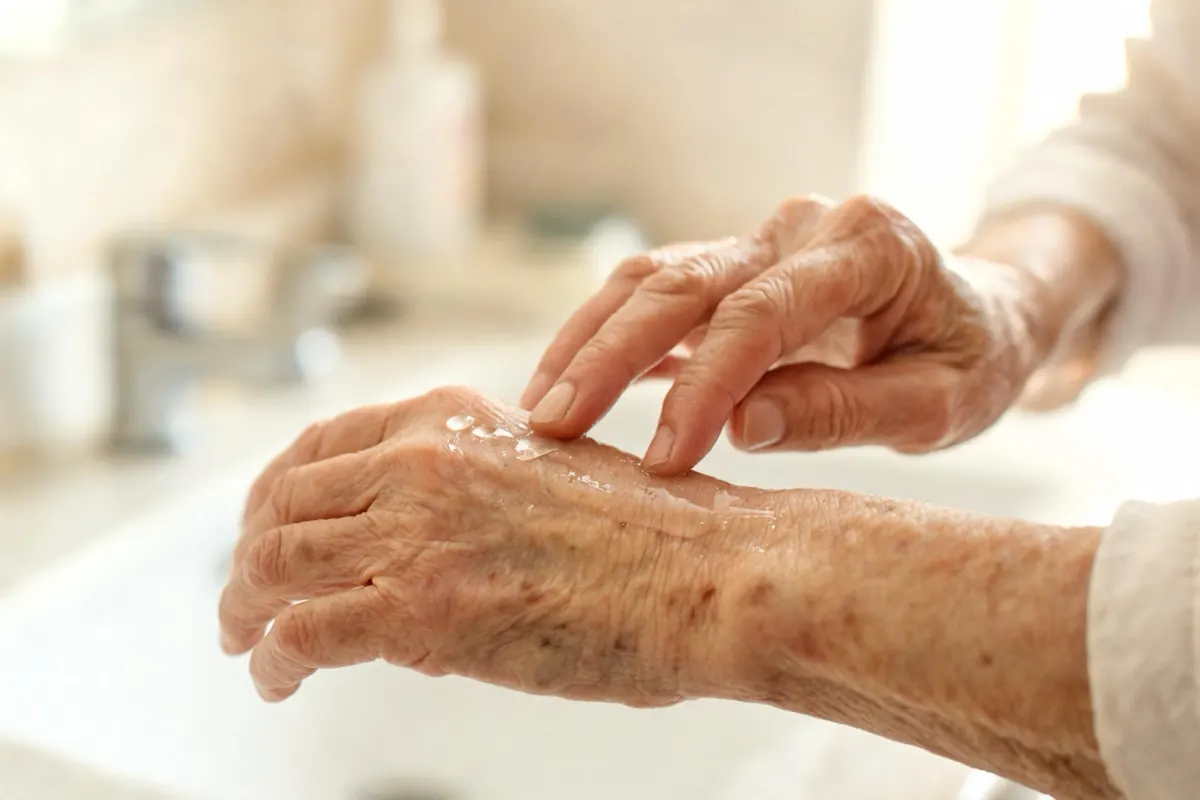
"Can thin skin be made thicker?" Partly, yes. Aged skin still responds to the right signals. Here are seven steps, ordered by strength of evidence.
1. Topical retinoids — the strongest evidence
Retinoids stimulate collagen production and skin cell renewal.
- Retinol (over the counter): in a randomized trial in elderly people, retinol lotion for 24 weeks improved fine wrinkles and increased procollagen I and glycosaminoglycans in naturally aged skin [1].
- Tretinoin (prescription): improved the structure of non-sun-exposed aged skin in a study [2].
How to start: a pea-sized amount on forearms or face two to three nights a week, building up slowly. Expect some dryness or redness at first. See retinol for thin skin.
2. Daily sunscreen — protect what you build
In a 4.5-year randomized trial, people using sunscreen daily showed no detectable increase in skin aging, and aging was 24% less than in those who used it at their own discretion [3]. Without sunscreen, retinoid gains are partly undone by UV.
3. Alpha-hydroxy acids (AHAs)
- Ammonium lactate 12% reduced steroid-induced skin thinning in a controlled study [4].
- Alpha-hydroxy acids increased skin thickness in a pilot study on photoaged skin [5].
AHAs can sting on fragile skin; patch test first.
4. Moisturize twice daily
Moisturizer doesn't build collagen, but it keeps skin supple and protected — twice-daily moisturizing cut skin tears by almost half in older adults [6]. Ceramide-based products help rebuild the barrier [7].
5. Nutrition
Protein, vitamin C (for collagen) and enough fluids support skin repair. Oral collagen supplements improved hydration and elasticity in meta-analyses, though effects on thickness and fragility are less clear [8].
6. Avoid what thins skin further
- unnecessary or long-term steroid creams — ask your doctor about alternatives
- smoking
- hot showers and harsh soaps
7. Protect while it strengthens
Long sleeves, padding, gentle handling and no tape on skin.
Realistic timeline
| Time | What you may notice |
|---|---|
| 2–4 weeks | Skin feels smoother and less dry (moisturizer) |
| 6–12 weeks | Texture improves (retinoid, AHA) |
| 3–6 months | Skin looks and feels more robust; fewer tears and bruises |
| Ongoing | Sunscreen prevents losing gains |
Which retinoid to choose
| Type | Strength | Notes |
|---|---|---|
| Retinyl palmitate | Mild | Gentle, weakest effect |
| Retinol | Moderate | Over the counter; best-studied OTC option for aged skin [1] |
| Retinaldehyde | Moderate–strong | Often better tolerated than tretinoin |
| Tretinoin | Strong | Prescription; strongest evidence [2] |
For paper-thin forearms, start with a low-strength retinol two nights a week. Apply to dry skin, follow with moisturizer, and always use sunscreen the next morning.
Frequently asked questions
Can thin skin be reversed?
Partly. Retinoids and AHAs can rebuild some collagen and thickness over months, and sunscreen prevents further loss. Skin won't become young again, but it can become more resilient.
What vitamin helps thicken skin?
Vitamin A in the form of topical retinoids has the best evidence. Vitamin C is essential for collagen production.
Does collagen powder thicken skin?
Meta-analyses show improved hydration and elasticity with collagen supplements. Evidence for actual thickening or fewer skin tears is limited.
How long does it take to thicken thin skin?
Expect three to six months of consistent retinoid use, daily sunscreen and moisturizing before clear changes.
Can I use retinol on my arms and hands?
Yes, many people do. Start with a low strength two nights a week and moisturize afterwards. Avoid broken skin and stop if it becomes red or sore.
Sources
- Kafi R, et al. Improvement of naturally aged skin with vitamin A (retinol). Archives of Dermatology, 2007. PubMed 17515510
- Kligman AM, et al. Effects of topical tretinoin on non-sun-exposed protected skin of the elderly. Journal of the American Academy of Dermatology, 1993. PubMed 7686187
- Hughes MC, et al. Sunscreen and prevention of skin aging: a randomized trial. Annals of Internal Medicine, 2013. PubMed 23732711
- Lavker RM, et al. Effects of topical ammonium lactate on cutaneous atrophy from a potent topical corticosteroid. Journal of the American Academy of Dermatology, 1992. PubMed 1597538
- Ditre CM, et al. Effects of alpha-hydroxy acids on photoaged skin: a pilot clinical, histologic, and ultrastructural study. Journal of the American Academy of Dermatology, 1996. PubMed 8642081
- Carville K, et al. The effectiveness of a twice-daily skin-moisturising regimen for reducing the incidence of skin tears. International Wound Journal, 2014. PubMed 25040325
- Andrew PV, et al. Topical supplementation with physiological lipids rebalances the stratum corneum ceramide profile and strengthens skin barrier function. British Journal of Dermatology, 2025. PubMed 40408261
- de Miranda RB, et al. Effects of hydrolyzed collagen supplementation on skin aging: a systematic review and meta-analysis. International Journal of Dermatology, 2021. PubMed 33742704
General information, not medical advice. Written by the Reunoa editorial team; Reunoa makes Bruise Defense & Repair Serum. See our editorial policy for how we pick sources and keep product mentions fair.