Steroid skin thinning: what causes it and does it reverse?
 By Margaret Hale, Reunoa EditorialLast updated
The short answer
Steroid medicines can thin the skin when used long-term: strong steroid creams on the same area for weeks to months, prednisone tablets, and — to a lesser degree — high-dose steroid inhalers. Thin skin bruises and tears easily. Early thinning from creams often improves over months after stopping, but long-standing changes may not fully reverse. Never stop a prescribed steroid on your own.
Key takeaways
- Prolonged use of potent topical steroids can cause skin thinning, easy bruising and tearing [1].
- Skin atrophy is linked to chronic rather than short topical steroid use [2].
- Prednisone can cause thin, fragile skin, purple blotches and slow healing of bruises [3].
- In a COPD trial, 11.2% of inhaled-steroid users vs 3.5% on placebo reported easy bruising [4].
- Ammonium lactate reduced steroid-cream skin thinning in a controlled study [5].
On this page
Steroids (corticosteroids) are some of the most useful medicines in medicine — for eczema, psoriasis, arthritis, asthma, COPD, polymyalgia and much more. One well-known downside of long-term use is thinner, more fragile skin.
How steroids thin the skin
Corticosteroids slow down the cells that make collagen and other parts of the dermis, and they slow skin cell turnover. Over time, the skin gets thinner, small vessels become more visible and fragile, and the skin bruises and tears more easily.
Which steroids cause thinning?
Steroid creams and ointments
DermNet lists skin thinning (atrophy), easy bruising (senile/solar purpura) and tearing, stretch marks and enlarged blood vessels among the side effects of prolonged use of potent topical steroids, especially when used for longer or stronger than needed [1]. A comprehensive review concluded skin atrophy seems to be induced by chronic rather than short-term use [2].
Risk rises with:
- strength (potent and very potent steroids > mild ones like 1% hydrocortisone)
- duration (weeks to months on the same area)
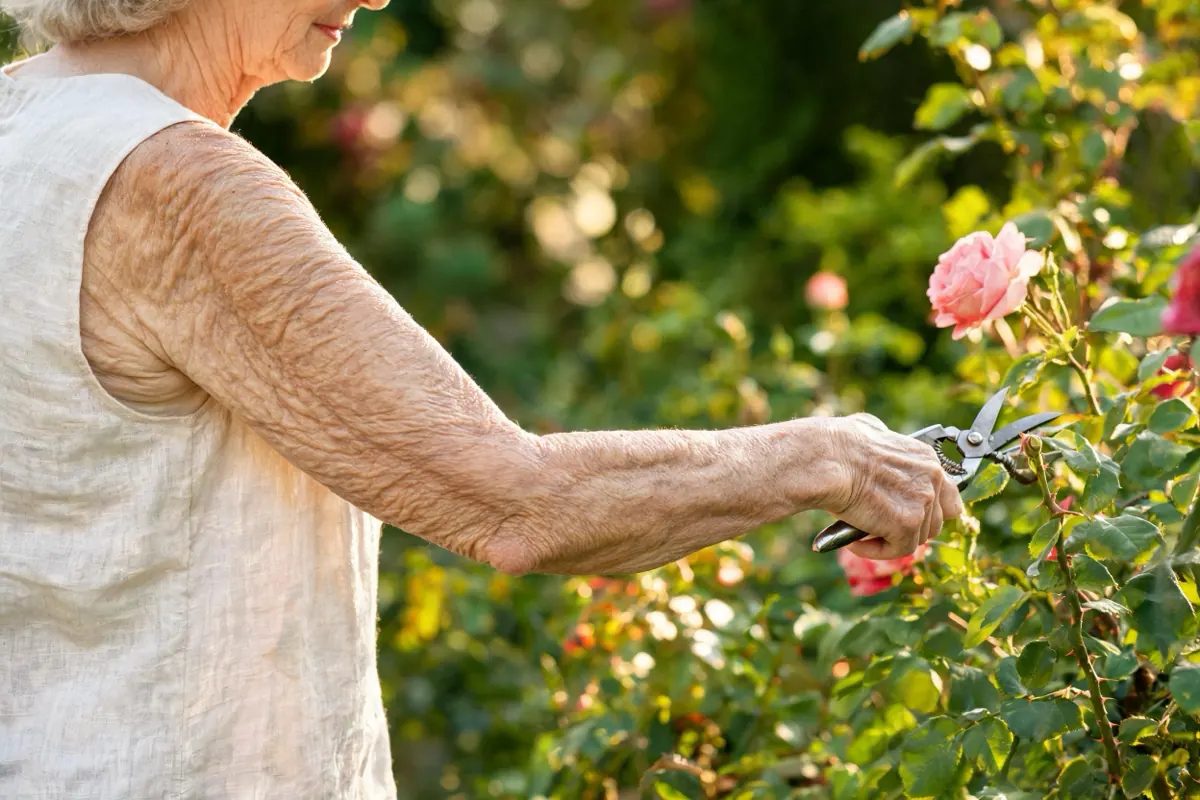
- thin-skinned areas — face, eyelids, skin folds, and the already thin skin of older forearms
- covering the cream with plastic or dressings
Over-the-counter hydrocortisone is mild. MedlinePlus advises stopping and calling your doctor if a condition doesn't improve within 7 days of non-prescription use [8]. More: hydrocortisone and skin thinning.
Steroid tablets (prednisone, prednisolone)
MedlinePlus lists thin, fragile skin, red or purple blotches or lines under the skin and slowed healing of cuts and bruises among prednisone side effects [3]. The longer and higher the dose, the more likely. See prednisone side effects on skin.
Steroid inhalers
Much less reaches the skin than with tablets, but high doses over years can matter. In the Lung Health Study II, 11.2% of people using an inhaled steroid reported easy bruising, compared with 3.5% on placebo, and slow healing of cuts was also more common [4]. See inhaler bruising.
Does steroid skin thinning reverse?
Partly, depending on how long and how strong.
- Early thinning from creams often improves gradually over months after stopping or switching to a milder product, under your doctor's guidance.
- Long-standing thinning, stretch marks and thinning combined with decades of sun damage may not fully reverse.
- Tablet-related fragility may improve as doses are reduced, but changes accumulated over years often persist to some degree.
Ways to support recovery and protect skin meanwhile:
- Ammonium lactate (12%) — in a controlled study, it reduced epidermal and dermal thinning from a potent steroid without affecting the steroid's anti-inflammatory effect [5].
- Topical retinoids — rebuild collagen in aged skin over months [6]; ask your doctor if they're suitable alongside your steroid.
- Twice-daily moisturizing — protects fragile skin; it halved skin tears in older adults [7].
- Sun protection and long sleeves.
Talking to your doctor
Don't stop steroid tablets suddenly — after long use, stopping abruptly can be dangerous. Ask instead:
- Is this the lowest effective dose and strength?
- Can I use the cream less often or only on flare days?
- Is there a steroid-sparing option for my condition?
- Should I rinse my mouth and use a spacer with my inhaler?
- What can I use to protect my skin?
Frequently asked questions
Does skin thinning from steroids go away?
Early thinning from creams often improves over months after stopping. Long-term changes, especially combined with sun damage, may not fully reverse.
How long does it take for steroid cream to thin skin?
Typically weeks to months of regular use of a potent steroid on the same area. Mild hydrocortisone used briefly is unlikely to cause thinning.
Can steroid inhalers thin your skin?
They can contribute, especially at high doses over years. In a COPD study, easy bruising was reported more often by inhaled-steroid users than by those on placebo.
What helps skin thinned by steroids?
Ammonium lactate lotion, topical retinoids (if suitable), twice-daily moisturizing, sun protection and protecting skin from knocks. Ask your doctor about lowering the steroid dose.
Sources
- Topical steroids (corticosteroid creams) — DermNet.
- Barnes L, et al. Topical corticosteroid-induced skin atrophy: a comprehensive review. Drug Safety, 2015. PubMed 25862024
- Prednisone — Drug Information — MedlinePlus.
- Tashkin DP, et al. Skin manifestations of inhaled corticosteroids in COPD patients: results from Lung Health Study II. Chest, 2004. PubMed 15486373
- Lavker RM, et al. Effects of topical ammonium lactate on cutaneous atrophy from a potent topical corticosteroid. Journal of the American Academy of Dermatology, 1992. PubMed 1597538
- Kafi R, et al. Improvement of naturally aged skin with vitamin A (retinol). Archives of Dermatology, 2007. PubMed 17515510
- Carville K, et al. The effectiveness of a twice-daily skin-moisturising regimen for reducing the incidence of skin tears. International Wound Journal, 2014. PubMed 25040325
- Hydrocortisone Topical — Drug Information — MedlinePlus.
General information, not medical advice. Written by the Reunoa editorial team; Reunoa makes Bruise Defense & Repair Serum. See our editorial policy for how we pick sources and keep product mentions fair.