Does hydrocortisone cream thin your skin?
 By Margaret Hale, Reunoa EditorialLast updated
The short answer
Mild 1% hydrocortisone cream, used as directed for short periods, rarely thins the skin. Skin thinning is mainly a risk with stronger prescription steroids or with any steroid used daily on the same area for weeks to months — especially on the face, skin folds or older, already thin skin. If over-the-counter hydrocortisone hasn't helped in 7 days, stop and see your doctor.
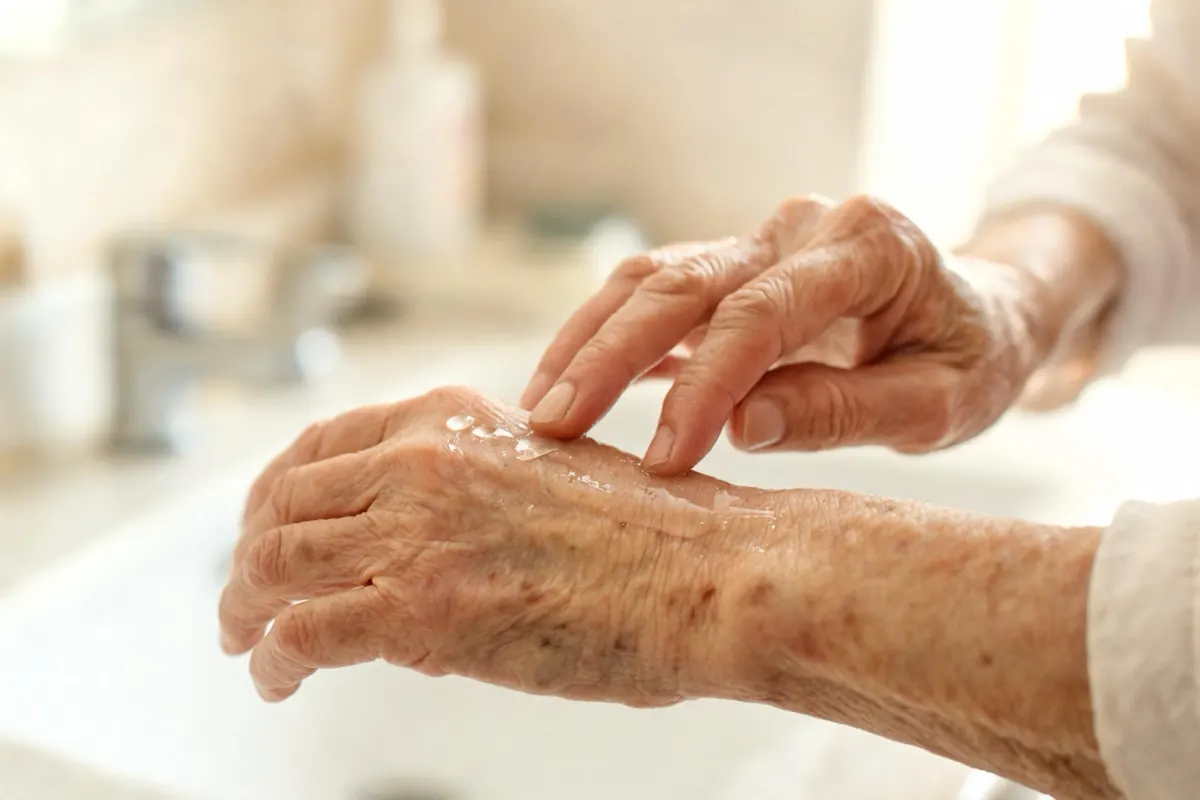
Hydrocortisone is the mildest topical steroid, sold over the counter at 0.5–1% for itching, insect bites, mild eczema and rashes. Many people over 60 use it often — and wonder whether it's behind their thinning skin.
The short version
| Situation | Thinning risk |
|---|---|
| 1% hydrocortisone, a few days, small area | Very low |
| 1% hydrocortisone, daily for many weeks on the same spot | Possible, especially on thin skin |
| Prescription potent steroids (e.g. clobetasol, betamethasone) for weeks to months | Real risk [2] |
| Any steroid under plastic, on the face or in skin folds | Higher risk |
Why strength and time matter
DermNet notes that most side effects described for topical steroids come from prolonged use of an unnecessarily potent steroid, and lists thinning, easy bruising and tearing among them [2]. A review concluded atrophy is linked to chronic rather than short-term use [3]. Hydrocortisone is at the mild end of the scale.
Older skin is already thinner [5], so it's sensible to be more careful with frequency and duration.
How to use hydrocortisone safely
- Use the mildest strength that works, as thin a layer as possible.
- Limit duration — MedlinePlus advises that if over-the-counter hydrocortisone doesn't improve your condition within 7 days, stop and call your doctor [1].
- Avoid the face and skin folds unless your doctor recommends it.
- Don't cover with plastic unless directed.
- Moisturize in between — dry skin itches more.
If you've used steroid cream a lot
Signs of thinning: shiny, see-through skin, visible small vessels, stretch marks, easy bruising or tearing where you apply it. Talk to your doctor about:
- switching to a milder product or non-steroid options
- using it only on flare days
- a lotion with ammonium lactate, which reduced steroid-induced thinning in a controlled study [4]
More: steroid skin thinning.
Steroid strength at a glance
Topical steroids are grouped by strength. Mild: hydrocortisone 0.5–1%. Moderate: e.g. clobetasone butyrate, triamcinolone 0.025%. Potent: e.g. betamethasone valerate, mometasone. Very potent: e.g. clobetasol propionate. The stronger the steroid and the longer it's used, the higher the risk of thinning [2]. If you've been prescribed a potent steroid for months, ask your doctor whether you can step down to a milder one or use it only during flares.
Alternatives to ask about
- regular emollients to reduce flares of eczema
- non-steroid creams such as calcineurin inhibitors for some conditions
- treating triggers (allergens, irritants, dry air)
Frequently asked questions
Can 1% hydrocortisone thin your skin?
It's unlikely with short-term use as directed. Daily use on the same area for many weeks could contribute to thinning, especially on older or thin skin.
How long can I use hydrocortisone cream?
For over-the-counter use, if there's no improvement within 7 days, stop and see your doctor. Longer use should be under medical guidance.
Does skin thinning from hydrocortisone reverse?
Mild thinning usually improves over weeks to months after stopping. Ask your doctor for alternatives if you need long-term treatment.
Is hydrocortisone safe on the face?
Only for short periods and if a doctor recommends it, because facial skin is thin and more prone to side effects.
Sources
- Hydrocortisone Topical — Drug Information — MedlinePlus.
- Topical steroids (corticosteroid creams) — DermNet.
- Barnes L, et al. Topical corticosteroid-induced skin atrophy: a comprehensive review. Drug Safety, 2015. PubMed 25862024
- Lavker RM, et al. Effects of topical ammonium lactate on cutaneous atrophy from a potent topical corticosteroid. Journal of the American Academy of Dermatology, 1992. PubMed 1597538
- Aging changes in skin — MedlinePlus Medical Encyclopedia.
General information, not medical advice. Written by the Reunoa editorial team; Reunoa makes Bruise Defense & Repair Serum. See our editorial policy for how we pick sources and keep product mentions fair.