Purpura check: is it senile purpura or something else?
 By Margaret Hale, Reunoa EditorialLast updated
The short answer
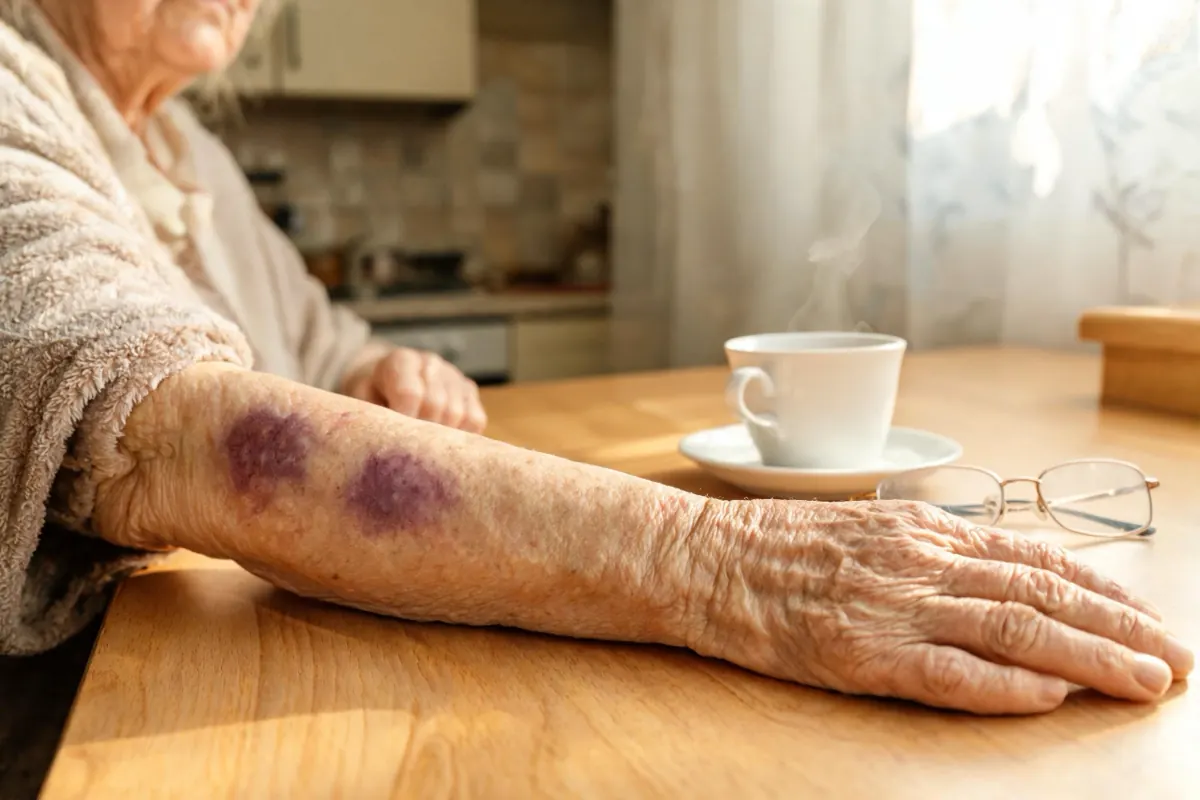
Senile (actinic) purpura typically appears as flat, dark-purple patches 1–4 cm wide with sharp edges on the outer forearms and backs of the hands, stays purple, and fades over one to three weeks — with no other symptoms. Pinpoint dots, raised or itchy spots, marks on the legs or trunk, or other bleeding and feeling unwell don't fit and should be checked by a doctor.
Answer four questions about the marks you're worried about. Nothing is stored or sent.
Answer for the purple marks you're worried about:
How the check works
It compares your answers with the typical features of senile purpura described by dermatology references [1] and with warning signs for other kinds of purpura [2] [4]:
| Feature | Typical senile purpura | Needs a doctor's look |
|---|---|---|
| Location | Outer forearms, backs of hands | Legs, trunk, face, mouth |
| Appearance | Flat, 1–4 cm, sharp edges | Pinpoint dots; raised, itchy or painful spots |
| Course | Stays purple, fades in 1–3 weeks, may leave brown | Keeps growing, not fading after 4 weeks |
| Other symptoms | None | Nosebleeds, gum bleeding, blood in urine/stool, fever, tiredness, weight loss |
Why these questions?
- Location: senile purpura appears on sun-exposed, thin skin [1].
- Pinpoint dots (petechiae): can signal low platelets or infection [2].
- Raised spots: palpable purpura suggests inflamed blood vessels (vasculitis) [4].
- Other bleeding: bleeding into the skin plus bleeding elsewhere should always be checked [3].
Limits
This check explains common patterns. It can't examine you, run tests or replace a doctor. If you're unsure, or anything changes, get checked.
Frequently asked questions
How do I know if it's senile purpura?
Typical senile purpura is flat, dark purple, 1–4 cm, sharp-edged, on the forearms or backs of the hands, and fades over 1–3 weeks without other symptoms.
What does it mean if purple spots are raised?
Raised purple spots can be a sign of inflamed blood vessels and should be checked by a doctor.
Are pinpoint purple dots senile purpura?
No. Pinpoint dots are petechiae, which can have other causes such as low platelets or infection. Get them checked.
Is this quiz a diagnosis?
No. It's an information tool. Only a doctor can diagnose.
Sources
- Senile purpura — DermNet (New Zealand).
- Purpura — MedlinePlus Medical Encyclopedia.
- Bleeding into the skin — MedlinePlus Medical Encyclopedia (U.S. National Library of Medicine).
- Purpura: causes, types and images — DermNet.
General information, not medical advice. Written by the Reunoa editorial team; Reunoa makes Bruise Defense & Repair Serum. See our editorial policy for how we pick sources and keep product mentions fair.