Senile purpura treatment: what the evidence says — and can it be reversed?
 By Margaret Hale, Reunoa EditorialLast updated
The short answer
There is no cure for senile purpura, but several approaches reduce new patches and support fragile skin. The best-studied are sun protection, twice-daily moisturizing, a citrus bioflavonoid supplement (50% fewer lesions in a six-week trial) and topical ingredients such as retinoids, alpha-hydroxy acids, arnica, vitamin K and ceramides. Results take weeks to months, and sun damage can't be fully reversed.
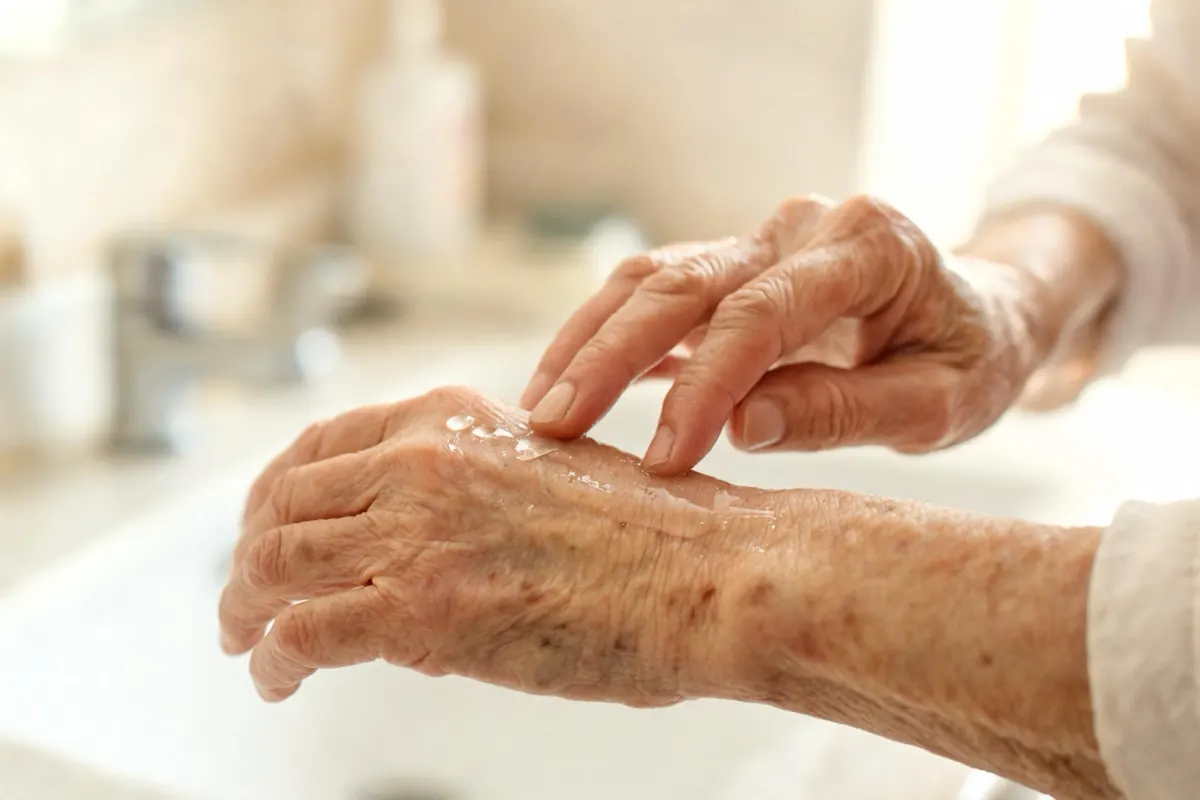
Key takeaways
- Sun protection is the core medical advice — it slows further damage [1].
- A citrus bioflavonoid supplement reduced purpura lesions by 50% after six weeks in a placebo-controlled trial [2].
- Topical retinol improved naturally aged skin, including collagen, in a randomized trial [3].
- Ammonium lactate (an alpha-hydroxy acid) reduced steroid-induced skin thinning in a study [4].
- Arnica (20%) and vitamin K creams helped laser bruises fade faster — not tested on purpura itself [5] [7].
On this page
- How we rate the evidence
- Treatment options at a glance
- 1. Sun protection (start here)
- 2. Moisturize twice a day
- 3. Citrus bioflavonoids (oral supplement)
- 4. Retinoids
- 5. Alpha-hydroxy acids
- 6. Arnica and vitamin K
- 7. Ceramides and barrier care
- 8. Combination products
- Can senile purpura be reversed?
- What doesn't help (or isn't proven)
- A realistic 12-week plan
- Frequently asked questions
Many people are told "there's nothing you can do" about senile purpura. That isn't quite true. There's no cure, but there is evidence for several measures that reduce new patches and make skin more resilient. Here's an honest look at each — including how strong the evidence is.
How we rate the evidence
- Good: at least one randomized, controlled trial in the relevant group
- Some: controlled studies in a related situation (e.g., laser bruises, aged skin)
- Limited: reviews, small or uncontrolled studies, or expert opinion
Treatment options at a glance
| Approach | What it does | Evidence for purpura |
|---|---|---|
| Sun protection | Prevents further collagen loss | Standard advice [1] |
| Twice-daily moisturizer | Keeps skin supple, protects barrier | Some — halved skin tears in older adults [9] |
| Citrus bioflavonoids (oral) | Thought to support small vessels | Good — 50% fewer lesions in 6 weeks [2] |
| Retinoids (retinol, tretinoin) | Rebuild collagen over months | Some — improved aged skin [3] |
| Alpha-hydroxy acids (ammonium lactate) | Thicken skin | Some — reduced steroid atrophy [4] |
| Arnica (high strength) | Helps bruises fade | Some — laser bruises [5] |
| Vitamin K (topical) | Helps bruises fade | Some — laser bruises [7] |
| Ceramides | Restore barrier lipids | Some — barrier improvement [10] |
| Combination creams | Several of the above | Limited — industry-funded review [8] |
1. Sun protection (start here)
Years of UV exposure break down the collagen that supports small vessels [11]. DermNet's management advice for senile purpura is sun protection — sunscreen and sun-protective clothing — to prevent further damage [1]. Apply broad-spectrum sunscreen to forearms and hands daily.
2. Moisturize twice a day
Dry skin is more brittle. In a randomized trial in aged-care homes, a twice-daily moisturizer on the limbs cut skin tears by almost half [9]. It hasn't been tested on purpura directly, but the same fragile skin is involved, and it's cheap and safe.
3. Citrus bioflavonoids (oral supplement)
This is the only treatment tested specifically on senile purpura in a randomized, double-blind, placebo-controlled study. After six weeks, the group taking a citrus bioflavonoid blend had 50% fewer purpura lesions than at baseline, with no side effects reported [2]. It was a small trial; ask your pharmacist before starting, especially if you take other medicines.
4. Retinoids
Retinol and prescription tretinoin stimulate new collagen. In a randomized trial in elderly people, retinol lotion over 24 weeks improved fine wrinkles and increased procollagen in naturally aged skin [3]. A review of photoaged-skin treatments confirms retinoids as a mainstay [12]. Downside: they can irritate thin skin — start slowly. See retinol for thin skin.
5. Alpha-hydroxy acids
Ammonium lactate lotion reduced skin thinning caused by strong steroid creams in a controlled study [4]. It may sting on very fragile skin.
6. Arnica and vitamin K
Both helped bruises fade faster in controlled studies — 20% arnica ointment vs placebo [5], vitamin K cream after laser treatment [7]. These were laser-induced bruises in younger volunteers, so it's reasonable but unproven to expect help with purpura.
7. Ceramides and barrier care
Ceramides are fats that hold the skin barrier together; they decline with age. Topical physiological lipids improved barrier function in a 2025 trial [10].
8. Combination products
A review discusses combining retinol, alpha-hydroxy acids, arnica, ceramides, niacinamide and vitamin K into one regimen for actinic purpura [8]. The review was funded by a purpura-cream maker, so treat it as a rationale rather than proof. Our comparison: best cream for senile purpura.
Can senile purpura be reversed?
Partly — the skin, not the years. You can't undo decades of sun damage completely. But studies show retinoids rebuild some collagen over months [3], alpha-hydroxy acids can thicken thin skin [4], and a supplement reduced new lesions [2]. Combined with sun protection and moisturizing, many people see fewer new patches and more resilient skin over three to six months. Expect improvement, not a "new" forearm.
What doesn't help (or isn't proven)
- Homeopathic arnica — didn't beat placebo for post-surgical bruising [6]
- Stopping blood thinners — never do this for purpura
- Collagen supplements for purpura — studied for wrinkles and hydration, not purpura
A realistic 12-week plan
| Weeks | Routine |
|---|---|
| 1–2 | Sunscreen daily, moisturize twice daily, sleeves for chores |
| 3–4 | Add a targeted serum or cream (arnica, vitamin K, ceramides) |
| 5+ | If tolerated, add a gentle retinoid 2–3 nights a week; ask about citrus bioflavonoids |
| 12 | Compare photos of your forearms in daylight |
Frequently asked questions
What is the best treatment for senile purpura?
Sun protection and twice-daily moisturizing are the foundation. A citrus bioflavonoid supplement reduced lesions by half in a trial, and topical retinoids, alpha-hydroxy acids, arnica, vitamin K and ceramides have supporting evidence.
Can a dermatologist treat senile purpura?
Dermatologists can confirm the diagnosis and prescribe stronger retinoids. Some offer procedures for aged skin, but evidence for purpura specifically is limited.
Does vitamin C help senile purpura?
Vitamin C is essential for collagen. Correcting a deficiency helps fragile skin. Topical vitamin C supports collagen in aged skin, but it hasn't been tested on purpura directly.
How long does senile purpura treatment take to work?
Moisturizing and sun protection help within weeks. Retinoids and supplements take six to twelve weeks or more to show effects.
Sources
- Senile purpura — DermNet (New Zealand).
- Berlin JM, et al. A randomized, placebo-controlled, double-blind study to evaluate the efficacy of a citrus bioflavanoid blend in the treatment of senile purpura. Journal of Drugs in Dermatology, 2011. PubMed 21720653
- Kafi R, et al. Improvement of naturally aged skin with vitamin A (retinol). Archives of Dermatology, 2007. PubMed 17515510
- Lavker RM, et al. Effects of topical ammonium lactate on cutaneous atrophy from a potent topical corticosteroid. Journal of the American Academy of Dermatology, 1992. PubMed 1597538
- Leu S, et al. Accelerated resolution of laser-induced bruising with topical 20% arnica: a rater-blinded randomized controlled trial. British Journal of Dermatology, 2010. PubMed 20412090
- Kotlus BS, et al. Evaluation of homeopathic Arnica montana for ecchymosis after upper blepharoplasty: a placebo-controlled, randomized, double-blind study. Ophthalmic Plastic and Reconstructive Surgery, 2010. PubMed 20683279
- Shah NS, et al. The effects of topical vitamin K on bruising after laser treatment. Journal of the American Academy of Dermatology, 2002. PubMed 12140470
- Ceilley RI Treatment of Actinic Purpura. Journal of Clinical and Aesthetic Dermatology, 2017. PubMed 28979656
- Carville K, et al. The effectiveness of a twice-daily skin-moisturising regimen for reducing the incidence of skin tears. International Wound Journal, 2014. PubMed 25040325
- Andrew PV, et al. Topical supplementation with physiological lipids rebalances the stratum corneum ceramide profile and strengthens skin barrier function. British Journal of Dermatology, 2025. PubMed 40408261
- Rittié L, Fisher GJ Natural and sun-induced aging of human skin. Cold Spring Harbor Perspectives in Medicine, 2015. PubMed 25561721
- Sadick N, et al. Topical Treatments for Photoaged Skin. Journal of Drugs in Dermatology, 2023. PubMed 37683070
General information, not medical advice. Written by the Reunoa editorial team; Reunoa makes Bruise Defense & Repair Serum. See our editorial policy for how we pick sources and keep product mentions fair.