Why does my skin tear so easily?
 By Margaret Hale, Reunoa EditorialLast updated
The short answer
Skin that tears easily is usually thin, dry, sun-aged skin in which the layers are only loosely attached, so a small knock or pull splits them. Long-term steroid tablets, inhalers or strong steroid creams, blood thinners and dry winter air make it worse. Twice-daily moisturizing, sun protection and covering the arms reduce new tears.
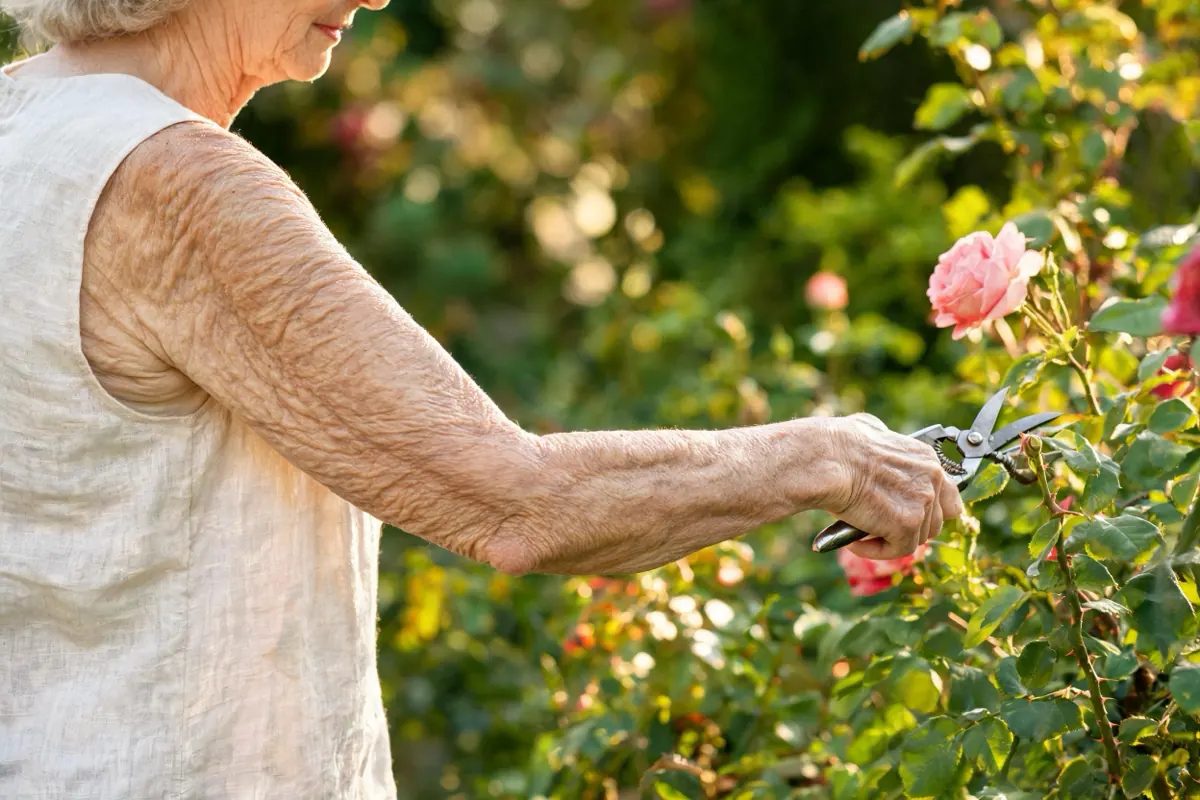
If a cardboard box, a cat's paw or simply pulling off a plaster leaves you with an open wound, it's not clumsiness. Your skin has become more fragile, and that has clear causes.
7 common reasons skin tears easily
1. Age-related thinning
After about 60, the skin gets thinner, loses collagen and elastin, and produces less oil [1]. There's less tissue to absorb a bump.
2. A weaker bond between the skin layers
In young skin the top layer interlocks firmly with the layer below. With age that junction flattens, so a shearing force — a slide, a pull — can separate the layers [7].
3. Years of sun
Sun exposure breaks down collagen and accelerates skin aging; forearms and the backs of hands are the most exposed areas [6]. That's why skin tears, purple patches and "crepey" skin cluster there.
4. Steroid medicines
Long-term steroid tablets such as prednisone, and strong steroid creams used for a long time, can thin the skin and make it bruise and tear easily [4] [3]. These medicines are often essential — don't stop them on your own; ask your doctor whether the dose or form can be adjusted. More: steroid skin thinning.
5. Blood thinners
They don't make skin thinner, but they make any tear bleed more and bruise more. The medicine is doing its job.
6. Dry skin
Dry skin is less flexible and cracks more easily. Central heating, hot showers and harsh soaps all dry it further.
7. Chronic skin fragility (dermatoporosis)
When thinning, bruising, purple patches and tears occur together, doctors may call it dermatoporosis — chronic skin fragility from aging, sun and sometimes steroids [2].
What helps
- Moisturize twice a day, arms and legs. In a randomized trial in aged-care homes, this simple routine cut skin tears by almost half [5].
- Protect your skin from the sun — sunscreen on hands and forearms, long sleeves outdoors.
- Cover up for gardening, housework and with pets.
- Use gentle soap substitutes and lukewarm water; pat dry.
- Skip sticky plasters; use silicone dressings.
- Ask about your medicines at your next appointment, especially long-term steroids.
- Consider ingredients with evidence for aging skin, such as retinoids where tolerated — see how to thicken thin skin.
When to see a doctor
Easy skin tearing is usually part of aging, but get checked if it started suddenly, comes with unexplained bruising, bleeding gums or nosebleeds, or if wounds are slow to heal. A doctor can look at medicines, blood tests and skin conditions that cause fragility.
Frequently asked questions
Why is my skin so fragile all of a sudden?
Skin fragility usually develops slowly, but you may notice it suddenly after a first skin tear. New medicines (especially steroids), illness, poor nutrition or a dry winter can also make it worse quickly. Mention a sudden change to your doctor.
What vitamin is good for skin that tears easily?
Vitamin C is needed to make collagen, and severe deficiency (scurvy) causes fragile skin and bruising. Most people eating fruit and vegetables get enough. Topical retinoids (vitamin A) have the best evidence for improving aged skin.
Can thin skin that tears easily be made thicker?
Partly. Retinoids and consistent moisturizing can improve the skin's structure and resilience over months, and sun protection prevents further damage. It won't make skin young again, but it can make it more robust.
Do prednisone and steroid inhalers cause skin tears?
Long-term steroid tablets can thin the skin. Inhaled steroids can contribute to easy bruising and thinner skin in some people, especially at higher doses. Keep using them as prescribed and ask your doctor about it.
Sources
- Aging changes in skin — MedlinePlus Medical Encyclopedia.
- Kaya G, Saurat JH Dermatoporosis: a chronic cutaneous insufficiency/fragility syndrome. Dermatology, 2007. PubMed 17911985
- Barnes L, et al. Topical corticosteroid-induced skin atrophy: a comprehensive review. Drug Safety, 2015. PubMed 25862024
- Prednisone — Drug Information — MedlinePlus.
- Carville K, et al. The effectiveness of a twice-daily skin-moisturising regimen for reducing the incidence of skin tears. International Wound Journal, 2014. PubMed 25040325
- Rittié L, Fisher GJ Natural and sun-induced aging of human skin. Cold Spring Harbor Perspectives in Medicine, 2015. PubMed 25561721
- LeBlanc K, Baranoski S, et al. Skin tears: state of the science: consensus statements for the prevention, prediction, assessment, and treatment of skin tears. Advances in Skin & Wound Care, 2011. PubMed 21876389
General information, not medical advice. Written by the Reunoa editorial team; Reunoa makes Bruise Defense & Repair Serum. See our editorial policy for how we pick sources and keep product mentions fair.